
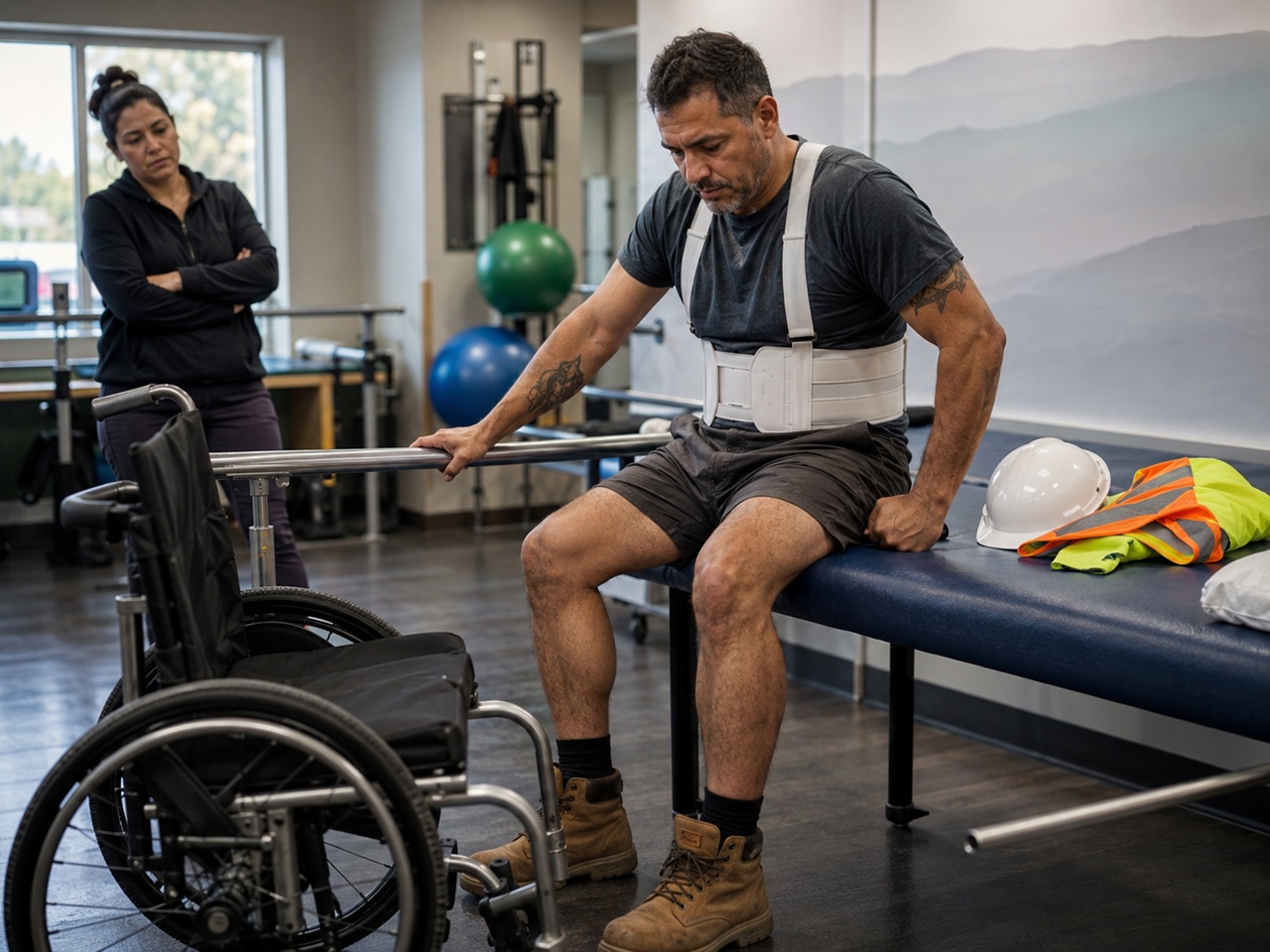
An Attorney Can Help You Pursue the Full Compensation You Need for Ongoing Medical Care, Lost Earning Capacity, and Long-Term Support
A New York City construction accident can change a worker’s life in an instant. One fall, collapse, falling object, equipment failure, or unsafe work platform can leave a worker facing a spinal cord injury that affects movement, sensation, work, independence, and family life.
New York City construction sites recorded 130 incidents involving injury or fatality in the first five months of 2026, according to the NYC Department of Buildings. Worker falls accounted for 49 of those incidents, making them the largest listed category in the report.
At Keogh Crispi, P.C., we understand what’s at stake after a spinal cord injury. We investigate how the accident happened, which safety rules were violated, and whether a claim beyond workers’ compensation may help protect the worker’s future.
Construction Falls And Falling Objects Can Damage The Spinal Cord
The spinal cord runs through the vertebrae, the bones that make up the spine. It carries signals between the brain and the rest of the body. When that cord is crushed, compressed, stretched, torn, or otherwise damaged, the body below the injury site may lose feeling, movement, strength, or normal function.
On construction sites, spinal cord injuries can happen when workers:
- Falls From Heights: Falls from scaffolds, ladders, roofs, platforms, sidewalk sheds, and unprotected openings can create enough force to damage the spine.
- Are Struck By Falling Objects: Tools, bricks, beams, concrete, plywood, equipment, and unsecured materials can hit a worker’s head, neck, back, or shoulders.
- Are Caught Between Objects: Workers can be crushed between machinery, vehicles, materials, walls, trenches, or collapsing structures.
- Are Hurt In Scaffold Or Ladder Failures: Broken planking, missing guardrails, unsecured ladders, and unstable scaffold systems can lead to devastating falls.
- Are Injured By Heavy Equipment: Cranes, hoists, forklifts, excavators, and other machinery can cause violent trauma when safety procedures aren’t followed.
These accidents don’t just cause short-term pain. A serious spinal injury can permanently change how a worker moves, works, sleeps, travels, earns income, and cares for their family.
New York Construction Safety Data Shows Why Falls Remain A Major Concern in the Industry
Falls remain one of the clearest dangers on New York job sites. The NYC Department of Buildings report for the first five months of 2026 listed worker falls as the largest category of construction incidents involving injury or fatality.
Federal workplace fatality data also shows how dangerous construction falls can be. The U.S. Bureau of Labor Statistics reported that New York's construction sector had 217 fatal workplace injuries in 2024. Falls, slips, and trips caused 49 of those deaths, or 23 percent.
A worker does not have to die for the consequences to be permanent. Survivors of falls, collapses, and struck-by accidents may face paralysis, chronic pain, nerve damage, spinal surgery, lost income, and years of rehabilitation.
Traumatic Spinal Cord Injuries Are Rare, But The Impact Is Severe
Spinal cord injuries happen less often than sprains, fractures, or cuts, but their impact is often far more severe. The National Spinal Cord Injury Statistical Center estimates that more than 18,000 new traumatic spinal cord injuries occur in the United States each year. Since 2015, falls have accounted for 32 percent of traumatic spinal cord injuries reported to the center.
For a construction worker, those numbers matter because job sites combine many fall and impact hazards in one place. Elevated work, unfinished floors, exposed openings, scaffold systems, ladders, heavy equipment, falling materials, and changing site conditions can all increase the risk of catastrophic spine trauma.
None of these statistics can tell a worker what their own case is worth. They do show why a spinal cord injury claim needs to account for the full medical, financial, and personal cost of the injury.
Complete And Incomplete Spinal Cord Injuries Affect The Body Differently
Doctors often describe spinal cord injuries as complete or incomplete. A complete injury means the worker loses all motor and sensory function below the injury level. An incomplete injury means some function remains, but movement, sensation, strength, and coordination may still be limited or unpredictable.
The location of the injury also matters. A cervical injury near the neck can affect the arms, hands, trunk, legs, and breathing. This may be called tetraplegia or quadriplegia. A thoracic, lumbar, or sacral injury lower in the spine may primarily affect the legs and lower body, which is often called paraplegia.
Recovery depends on the level of injury, severity, medical treatment, complications, age, overall health, and rehabilitation. Some workers regain partial function. Others face permanent paralysis, chronic pain, bladder or bowel complications, respiratory issues, pressure injuries, depression, and lifelong care needs.
Spinal Cord Injuries Can End Construction Careers
Construction work is physical. It often requires lifting, climbing, carrying, bending, balancing, operating equipment, and working at height. A spinal cord injury can take those abilities away permanently.
A 2024 study in JAMA Network Open found major employment and income losses after traumatic cervical spinal cord injury. In the study, employment among people with spinal cord injuries dropped from 84 percent before injury to 52 percent five years later. The same study found a 41.3 percent reduction in mean annual income over the five years after injury.
For a construction worker who built a career on physical labor, that is not just a bad year. It may be a completely different future. A strong claim needs to account for lost wages, reduced earning capacity, lost benefits, retraining limits, future medical care, home changes, mobility equipment, and the daily cost of living with a serious spine injury.
Workers’ Compensation May Not Be The Only Legal Option
Workers’ compensation can provide medical care and partial wage replacement after a job injury, but it usually does not pay the full value of a catastrophic spinal cord injury. It also generally prevents an injured worker from suing their direct employer.
New York construction sites are different from many workplaces because multiple companies may be involved in the same project. A property owner, general contractor, subcontractor, equipment company, or another third party may have created or allowed the dangerous condition that caused the injury.
When someone other than the direct employer is legally responsible, a worker may have a third-party claim in addition to workers’ compensation. A third-party claim can pursue damages workers’ compensation does not fully cover, including pain and suffering and the full long-term effect of lost earning capacity.
New York Labor Law Can Strengthen Construction Injury Claims
New York has several labor laws that can be especially important after a spinal cord injury on a construction site.
- Labor Law Section 240: Often called the Scaffold Law, this statute requires owners and contractors to provide proper safety devices for elevation-related work, including scaffolds, ladders, hoists, slings, ropes, and other protective devices.
- Labor Law Section 241: This law addresses construction, demolition, and excavation work and requires compliance with safety rules designed to provide reasonable and adequate protection.
- Labor Law Section 200: This law reflects the general duty to provide reasonable and adequate protection for workers’ health and safety.
These laws matter because a spinal cord injury case may not depend only on what the injured worker did in the moment before the accident. The investigation should also examine whether the required safety equipment was missing, defective, unstable, improperly placed, or never provided at all.
Falls, scaffold failures, falling objects, and other gravity-related hazards often require a close look at New York Labor Law 240 because owners and general contractors may have non-delegable safety responsibilities when workers are exposed to elevation-related dangers.
Evidence That Can Prove How The Construction Accident Happened
A spinal cord injury case can turn on evidence that disappears quickly. Construction sites change from day to day. Dangerous conditions are fixed, debris is removed, equipment is moved, and witnesses may leave for other jobs.
Important evidence may include:
- Construction Site Photos: Pictures of the scaffold, ladder, opening, debris, missing guardrails, fall area, equipment, and safety devices can help show what caused the injury.
- Witness Statements: Coworkers, subcontractors, delivery workers, inspectors, and bystanders may have seen the hazard or the accident itself.
- Accident Reports: Site reports, employer reports, DOB records, OSHA records, incident logs, and supervisor notes may identify violations or unsafe conditions.
- Safety Plans and Logs: Safety meetings, toolbox talks, daily logs, site safety plans, inspection reports, and training records may show whether the site was properly managed.
- Equipment Records: Scaffold tags, ladder inspections, maintenance records, hoist records, and manufacturer information can help show whether equipment failed or was misused.
- Medical Records: Emergency records, imaging, surgery notes, rehabilitation records, and life-care planning documents can show the full impact of the spinal injury.
Because the site can change so fast, early investigation is critical. Once a hazard is repaired or removed, proving what existed at the moment of injury becomes much harder.
Compensation After A Construction Spinal Cord Injury
Every spinal cord injury case depends on its own facts. The value of the claim may depend on the severity of the injury, the completeness of the injury, the need for surgery, long-term care needs, future work ability, available insurance, and which laws apply.
Compensation in a third-party construction accident claim may include:
- Past and Future Medical Care: Emergency care, hospitalization, surgery, rehabilitation, medication, pain management, and specialist treatment.
- Lost Wages and Earning Capacity: Income already lost and the money the worker would have earned over a full career.
- Home and Vehicle Modifications: Wheelchair ramps, accessible bathrooms, stair lifts, adaptive vehicles, and other mobility changes.
- Medical Equipment and Personal Care: Wheelchairs, hospital beds, braces, transfer equipment, home health aides, and long-term support.
- Pain and Suffering: Compensation for physical pain, loss of mobility, emotional distress, loss of independence, and permanent changes to daily life.
- Family Losses: In fatal cases, surviving family members may have a wrongful death claim.
At Keogh Crispi, P.C., our case results include a $1.2 million recovery for a plumber who fell from a ladder on a construction site and suffered spine injuries requiring surgery. While past results do not guarantee a similar outcome, it's important to remember that serious spine injuries should be evaluated based on the full medical evidence, the facts of the accident, and the worker’s future needs.
Keogh Crispi, P.C. Fights For Injured Construction Workers
If you suffered a spinal cord injury on a New York City construction site, you’re likely facing medical bills, lost income, pain, fear, and an uncertain future. You may also be dealing with insurance companies that want to limit what they pay or point fingers at someone else.
Keogh Crispi, P.C. has spent decades building cases for injured construction workers throughout the state. We investigate every accident from the ground up, preserve evidence, work with medical and construction safety experts, and identify every claim that may be available beyond workers’ compensation.
You don’t have to face a spinal cord injury claim on your own. Contact us to schedule a free consultation with a New York City construction accident lawyer who knows how to get meaningful results. There are no upfront costs, and you pay nothing unless we win your case.
"Pat was very transparent and responsive to any of my questions or concerns throughout the whole process. He is very professional with his work, and I would highly recommend." - Salvatore G., ⭐⭐⭐⭐⭐