
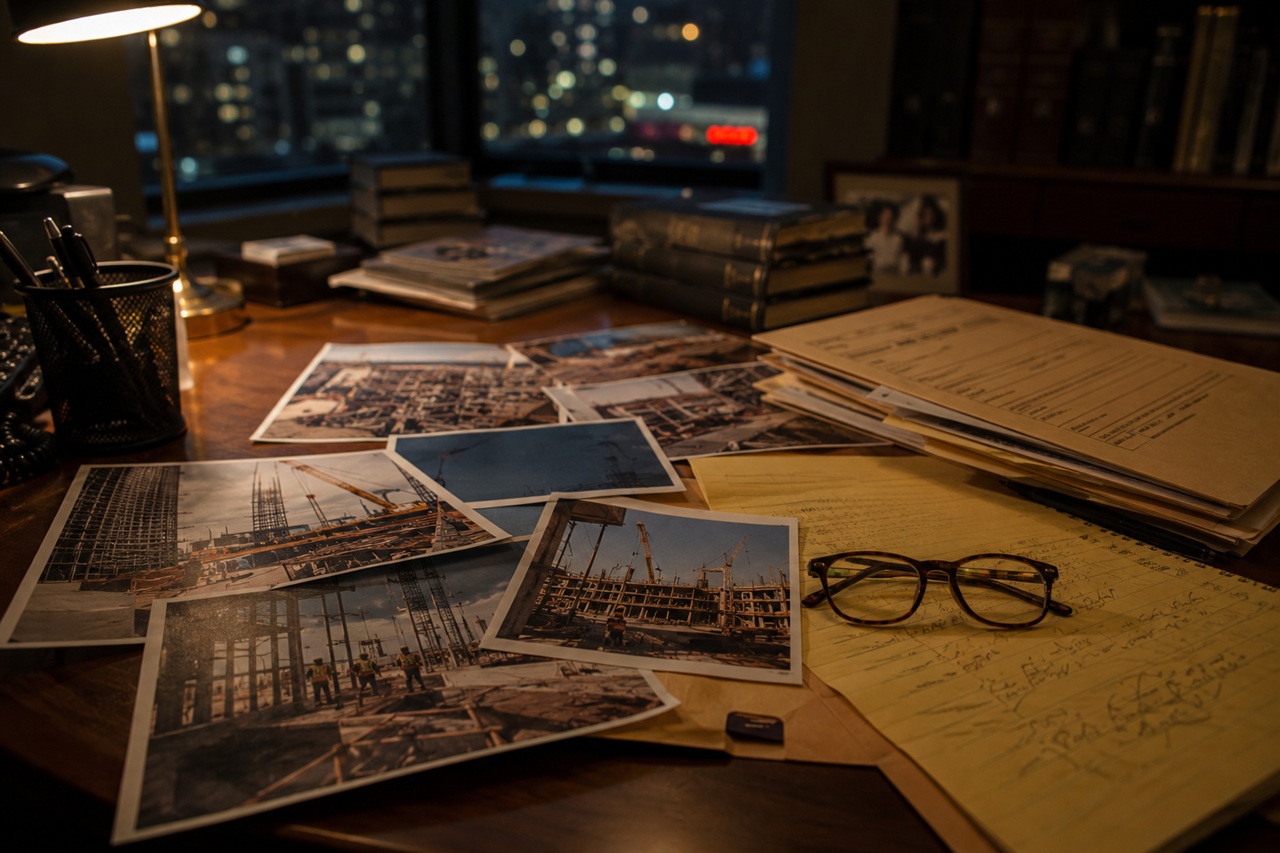
The Images You Take at the Scene of the Accident Can Make or Break Your Injury Claim
Construction accidents can happen fast in New York City. One second, a construction worker can be standing on scaffolding or demolishing a building. Next, they’re in an ambulance, being transported to New York-Presbyterian Lower Manhattan Hospital Emergency Department or another New York City emergency room for a life-threatening construction injury.
Serious construction accident injuries happen every day in New York City. In 2024, a total of 482 workers were injured on NYC building construction sites, according to the New York City Department of Buildings. And that figure represents a nine-year low. Even in the city’s safest recent year, hundreds of workers were hurt.
When these accidents occur, there’s often a lot of debate about what happened and who’s at fault. That’s why evidence is so important in these cases. And some of the strongest pieces of evidence can be photos of the construction site. At Keogh Crispi, P.C., we’ve seen firsthand how the right photos can change the outcome of a construction injury case.
Why Do Construction Site Photos Matter So Much In An Injury Case?
A construction injury claim lives or dies on evidence. The responsible parties, including general contractors, subcontractors, site owners, and equipment manufacturers, will dispute fault. Their insurance carriers will question the severity of the hazard and how long it existed. Without documentation, an injured worker is left arguing about what the site looked like based on memory alone, against parties who have their own investigators and attorneys working from day one.
Photos change that dynamic. A photograph of an unsecured ladder, a missing guardrail, or debris-covered flooring is objective. It shows the condition of the site at the time of the injury before anyone had a chance to fix it. It corroborates a worker’s account of what happened, supports testimony from safety professionals about what violations existed, and gives a jury something concrete to look at. Under Occupational Safety and Health Administration (OSHA) accident investigation requirements, photographs are specifically listed as a required element of any proper accident investigation. When a site fails to document conditions after an injury, that failure itself can become evidence of negligence.
What Should You Photograph After A Construction Site Accident?
The most important photographs are the ones taken at the scene immediately after the accident, before anything is moved, repaired, or cleaned up. Taking pictures is one of the most important steps to take after a construction accident. If you’re physically able to do so safely, or if a co-worker can help, document the following:
- The Exact Location of the Accident. Wide shots that establish where you were on the site, what floor or elevation you were working at, and what the surrounding conditions looked like. Include visible landmarks, scaffolding, and any equipment nearby.
- The Specific Hazard That Caused the Injury. Close-up photos of the defective scaffold plank, missing guardrail, broken ladder rung, slippery surface, unsecured materials, or whatever condition caused the fall or injury. Multiple angles, multiple distances.
- Missing or Inadequate Safety Equipment. If there was no safety netting, no toe board, no hard barricade, or no warning signage where one was required, photograph the absence. What isn’t there can be just as important as what is.
- Your Injuries. Photograph visible injuries at the scene and continue photographing them over the following days and weeks as bruising, swelling, and other trauma develop. Injuries often look worse on day three than on day one.
- Any Posted Notices or Signage. Photograph any safety signs, inspection certificates, permit postings, or contractor notices visible at the site. These can establish who was responsible for which parts of the work and what safety obligations they had acknowledged.
If you’re too injured to photograph the scene yourself, ask a co-worker to do it. Do it before leaving the site if at all possible. Every minute that passes is a minute in which something could be moved or changed.
How Do Photos Help Establish Liability Under New York Labor Law?
New York’s Labor Law provides some of the strongest protections for construction workers in the country. Under New York Labor Law Section 240, known as the “Scaffold Law,” general contractors and site owners are strictly liable for gravity-related injuries, meaning falls from height or injuries caused by falling objects. Under Labor Law Section 241(6), they can be held liable for violations of the New York Industrial Code. Under Labor Law Section 200, liability attaches when they knew or should have known about a dangerous condition. Photos directly support claims under all three statutes.
Under the Scaffold Law, a photo showing that a worker was performing work at elevation without adequate fall protection is powerful evidence of a violation. Under Section 241(6), a photo showing debris scattered across a work surface, an unmarked floor opening, or an unsecured load directly supports a claim that the Industrial Code was violated. Under Section 200, a photo showing a longstanding hazardous condition, one that looks well-worn rather than newly created, helps establish that the responsible party had notice of the danger and failed to correct it. The camera doesn’t argue. It just shows what was there.
What Happens If Photos Are Not Taken Or Evidence Disappears?
Missing evidence is one of the most common challenges in construction injury cases. When no photos were taken at the scene, the case doesn’t automatically fail, but it becomes harder to prove. Other forms of evidence can help fill the gap, and an attorney can take legal steps to preserve what remains. The most important tools when site photos are unavailable include:
- Preservation Demands. An attorney can send an immediate written demand requiring the general contractor, subcontractor, and site owner to preserve all physical evidence, documents, photographs, videos, and inspection records related to the accident. Failure to comply with such a demand can support a spoliation claim, meaning a court may draw an adverse inference against the party that destroyed evidence.
- OSHA Investigation Records. Under OSHA’s own regulations, accident investigations must include photographs, measurements, and descriptions of the scene. If OSHA investigated your accident, those records can be obtained and used as evidence in a civil claim.
- Witness Testimony. Co-workers who saw the hazardous condition or witnessed the accident can provide sworn testimony. Identifying and reaching those witnesses quickly, before they change jobs or their memories fade, is one of the first things a lawyer should do after being retained.
- DOB Inspection Records. The New York City Department of Buildings inspects construction sites and issues violation notices and stop-work orders when it finds hazardous conditions. Prior violations at the same site can establish that a dangerous condition was known, recurring, and ignored.
The absence of photos makes a case harder, but it doesn’t make it impossible. A thorough investigation can often reconstruct what the site looked like, but only if the effort starts quickly, before records disappear and witnesses scatter.
Can Security Camera Footage And Video Replace Photographs?
Video evidence is valuable, sometimes even more so than still photos. Many New York City construction sites have security cameras, and some accidents are captured on footage that shows exactly what happened in real time. That kind of evidence is extremely compelling. The problem is that security footage is routinely overwritten within 24 to 72 hours. Once it’s gone, it’s gone. The only way to preserve it is to send a preservation demand to the site owner immediately after the accident, before the footage cycles.
Video supplements photos but doesn’t replace them. A surveillance camera captures angles it was pointed at, not necessarily the condition of a scaffold or the state of a floor surface a few feet away. Still photographs can show detail, dimension, and context that a wide-angle security feed may miss entirely. The strongest cases combine both: photos taken immediately after the accident, plus any available video footage secured through a preservation demand. Together, they give a jury a complete picture of what actually happened on that job site.
How Can A New York Construction Accident Lawyer Help You?
Construction sites change quickly, and the responsible parties have investigators working from the moment an accident is reported. Every hour that passes without a lawyer on your side is an hour in which evidence can be altered, footage can be overwritten, and witnesses can move on. The sooner an attorney intervenes, sending preservation demands, securing the scene, identifying witnesses, and beginning a formal investigation, the stronger the foundation of your case.
At Keogh Crispi, P.C., attorney Pat James Crispi has built a strong track record fighting for injured construction workers in New York City. Our firm intervenes fast, pores over evidence, and builds the kind of airtight cases that insurance companies know they can’t easily beat. Our case results include $6 million in total for three workers injured in a crane collapse on an NYC construction site.
If you’ve been injured on a construction site in New York City, don’t wait. Contact us and schedule a free consultation with a New York construction accident attorney you can count on. Our office is conveniently located in Manhattan. We work on a contingency fee basis, which means you don’t owe us anything unless we recover for you.
“I met Mr. Pat Crispi through a coworker who had a construction accident. I as well had a construction accident. Mr. Crispi was extremely pleasant and sympathetic to my needs. He got me the results I never expected. I also had a car accident recently, and he represented me as he did in my other accident. If you’re looking for the right attorney to get the results that you are looking for call him. I’m very pleased to recommend him to anyone, anytime. Thank you very much, Pat Crispi. You’re an excellent attorney.” – Marc Summa, ⭐⭐⭐⭐⭐